LEARN TO SWIM: FLOAT UP
Learning About Buoyancy in Milestone 2 of 4 of the Learn to Swim Program
Students who reach the Float Up milestone will:
- Gain confidence that water will help hold them up
- Understand how to manage their body position in water
- Learn to hold and release their breath in a controlled manner
- Know how to use their hands and feet to stay afloat
Floating is easy, right? Either something floats or it sinks. This might seem like common knowledge, but what we have learned while teaching nearly 400,000 people how to swim is that there is more to floating – and specifically floating up – than meets the eye.
That’s why Foss Swim School identifies “Float Up” as one of the key milestones on the Swim Path® for our Learn to Swim program, and it’s just as important as becoming acclimated to water and mastering strokes.
We don’t spend weeks and weeks just floating in the water, of course, but effective floating and confident mastery of the skills involved does take time and practice. Activities and lessons that include floating and float-control skills are woven into what we teach students based on their age and ability.

Four Things Students Learn When They "Float Up"
Here are some of the key elements of floating up:
Learning to Trust Buoyancy
Students learn how it feels to reach the point where their body naturally stops sinking. Sinking can be a scary feeling, so knowing it will stop helps students learn not to worry. We use floats and support to help develop this skill.
- Float on back with light touch on small of back, 1 minute
- Float on back with noodle under small of back, 1 minute
- Float on back unassisted, 1 minute
Taking, Holding, and Releasing Their Breath
Students learn how to take in, hold, and release air while floating or moving.
- Harvester Hands on noodle, face in, 5 feet x 5 laps
- Flip from back to front with assistance, x 5 repetitions
Managing Center of Gravity
The human body is less buoyant from the waist down than from the waist up. The lungs sit high in the body, while the pelvis and legs are relatively dense and extend out like a lever. This tends to cause people to slowly rotate into a head-up position when floating. Teachers show students how to counteract that by using their muscles to try and lift their hips higher in the water than their chest.
- Manage centers of buoyancy and gravity by submerging with assistance, x 5 repetitions
- Independently manage centers of buoyancy and gravity by submerging, x 5 repetitions
Propulsive Hands and Feet
In addition to natural buoyancy, moving the hands and feet helps keep the swimmer on the surface. It also allows them to start moving through the water – essential for getting to safety and the first steps towards swimming a stroke
- Tiger Paddle, 10 feet x 5 laps
- Flap wings without kicks, 10 feet x 5 laps
- Safety Turn from sitting on edge with partial assistance, x 5 repetitions
- Safety Turn from sitting on edge unassisted, x 5 repetitions
- Safety Turn from jump and exit water, x 5 repetitions
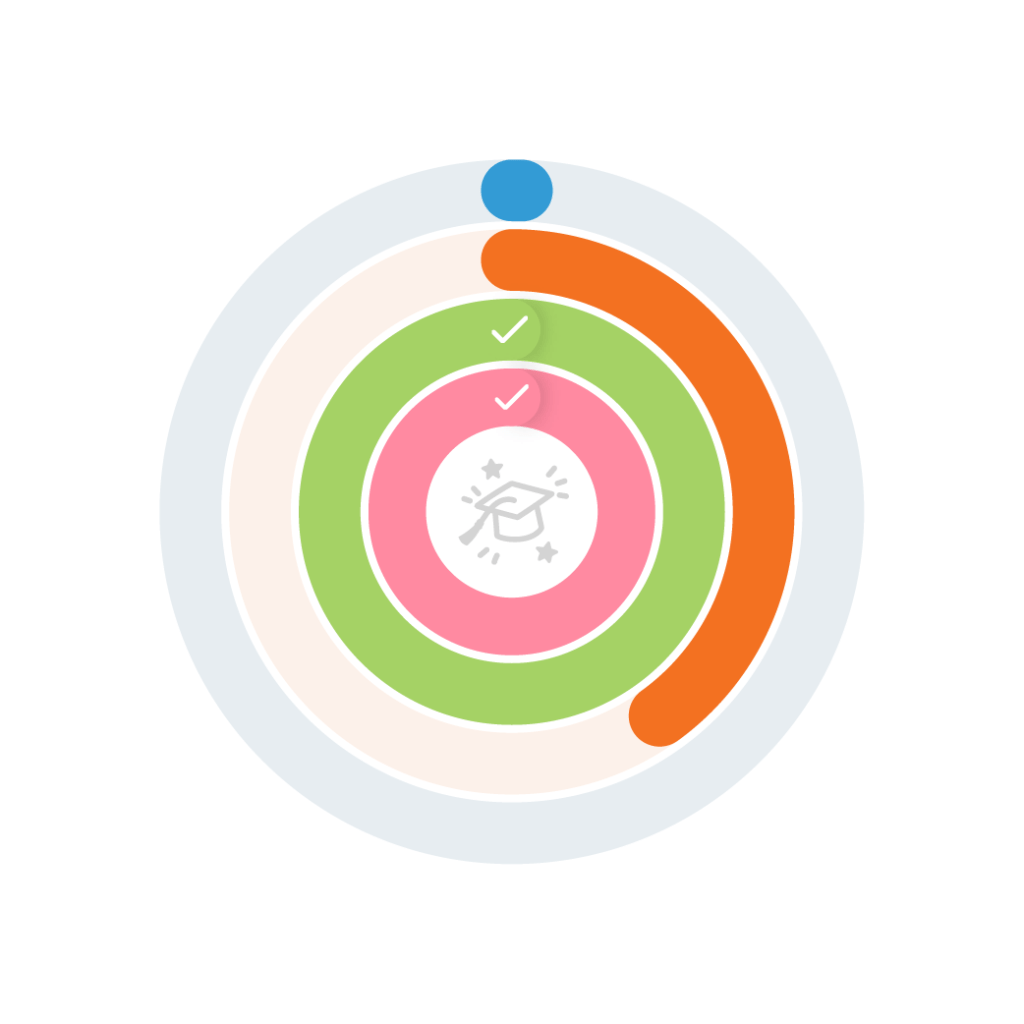
Levels where Float Up is taught
Float Up skills are a big part of the Backfloat Baby levels geared towards toddlers, and our Little levels for kids ages 3-7. Older students who are new to swimming learn it as well, but usually develop these skills more quickly, mostly in a 1-level class.
- Backfloat Baby 3
- Backfloat Baby 4
- Little 1-4 (3-5 years)
- Middle 1-2 (5-7 years)
- Big 1 (7-10 years)
- 10+1 (10-17 years)
- Adult 1 (18+ years)
Levels where Float Up is taught
Float Up skills are a big part of the Backfloat Baby levels geared towards toddlers, and our Little levels for kids ages 3-7. Older students who are new to swimming learn it as well, but usually develop these skills more quickly, mostly in a 1-level class.
- Backfloat Baby 3
- Backfloat Baby 4
- Little 1-4 (3-5 years)
- Middle 1-2 (5-7 years)
Backfloat Baby 3
Backfloat Baby 4
Little 1-4 (3-5 years)
Middle 1-2 (5-7 years)
Big 1 (7-10 years)
10+1 (10-17 years)
Adult 1 (18+ years)
- Big 1 (7-10 years)
- 10+1 (10-17 years)
- Adult 1 (18+ years)
Reaching the Float Up Milestone and Moving to the Next Stage
Like every part of our Learn to Swim program, floating is taught deliberately and progressively. Students don’t need to understand physics to know it when they feel it. By working with the natural inclinations of their bodies, any student can learn to float – and swim – well.
Once a student has mastered floating, they are ready to take the next step: learning how to Flip to Breathe. This is where we start to introduce more propulsive motions that allow a student to move through the water deliberately and with growing confidence. Flipping to breathe takes the core lessons learned while floating and learning breath control and turns it into true swimming!