LEARN TO SWIM: FLIP TO BREATHE
Flipping In the Water is a Core Skill in Milestone 3 of 4 of the Learn to Swim Program
Students who reach the Flip to Breathe milestone will:
- Master the safety stroke, a lifesaving skill
- Master the motions and techniques to flip independently
- Improve their breath control and timing
- Learn more advanced propulsion techniques with hands and feet
- Be prepared to put skills together into strokes in the next milestone
As far as the Foss Swim Path® curriculum is concerned, Flip to Breathe is arguably the most fundamental milestone for our students. The earlier milestones are necessary to get to this point, but, from a safety perspective, reaching the Flip to Breathe milestone means that a person who finds themselves in the water in an emergency may perform a self-rescue.
In addition to its critical role in safety, Flip to Breathe is a fundamental skill for building swim strokes, especially freestyle (aka front crawl). By the time a student has mastered this skill, they are ready to start adding other motions and body positions that, when combined, will result in confident swimming.
This is why Flip to Breathe happens early in the Swim Path. The key is for students to know they can get to their back whenever they need air and breathe comfortably.
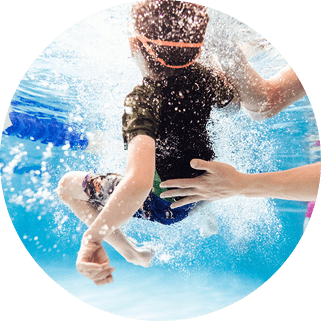
Three Things Students Learn When They "Flip to Breathe"
The skills learned in this milestone begin with fundamentals. Teachers work with students to ensure they float on their front with high hips and an extended neck. Breathing and timing skills are refined. In this milestone, pieces begin to come together, accelerating progress towards graduation.
Flipping from Front to Back
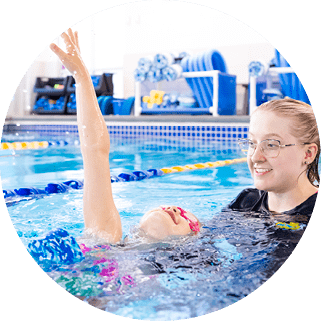
Flipping from back to front is part of an earlier milestone, but going from front to back has different elements. In the pancake flip, the roll starts with the shoulders and uses core muscles, not the neck, which is not always instinctive for students. As they flip, students improve their coordination while their face leaves the water.
- Flip from front to back with assistance, x 5 repetitions
Arm and Leg Motions for Propulsion
Next, we focus on movement across the water. Tiger paddles, learned earlier, use the hands and feet to move the swimmer ahead. On the back, we teach “bird flaps,” also known as the elementary backstroke, drawing arms and legs up, extending them, and bringing them back together. Additional kicks and arm motions lay the groundwork for the full backstroke.
- Flap wings with kicks, 15 feet x 5 laps
- Backstroke kicks on back, 25 feet x 5 laps
- One-arm Paint the Ceiling with equipment, no pattern, 25 feet x 5 laps
Putting It All Together
When a student can put these together consistently, they can perform the Safety Stroke: four tiger paddles, flip, four bird flaps, flip, and repeat as long as necessary. The alternations help a student steer to safety, ensure plenty of time to breathe, and keep them from tiring quickly. Another skill, Frank and Murrays, starts evolving this motion in a way that will lead to swimming the freestyle.
- Safety Stroke, 15 feet x 5 laps
- Frank and Murray with flip breath, 25 feet x 5 laps
Levels where Flip to Breathe is taught
Flip to Breathe is a key component of the later Little levels for kids ages 3-5, the early Middle levels for kids ages 5-7, and all other introductory levels for older students. It is also introduced to the oldest toddlers in our Backfloat Baby program and will be mastered as they progress.
- Backfloat Baby 4
- Little 2-4 (3-5 years)
- Middle 1-2 (5-7 years)
- Big 1 (7-10 years)
- 10+1 (10-17 years)
- Adult 1 (18+ years)
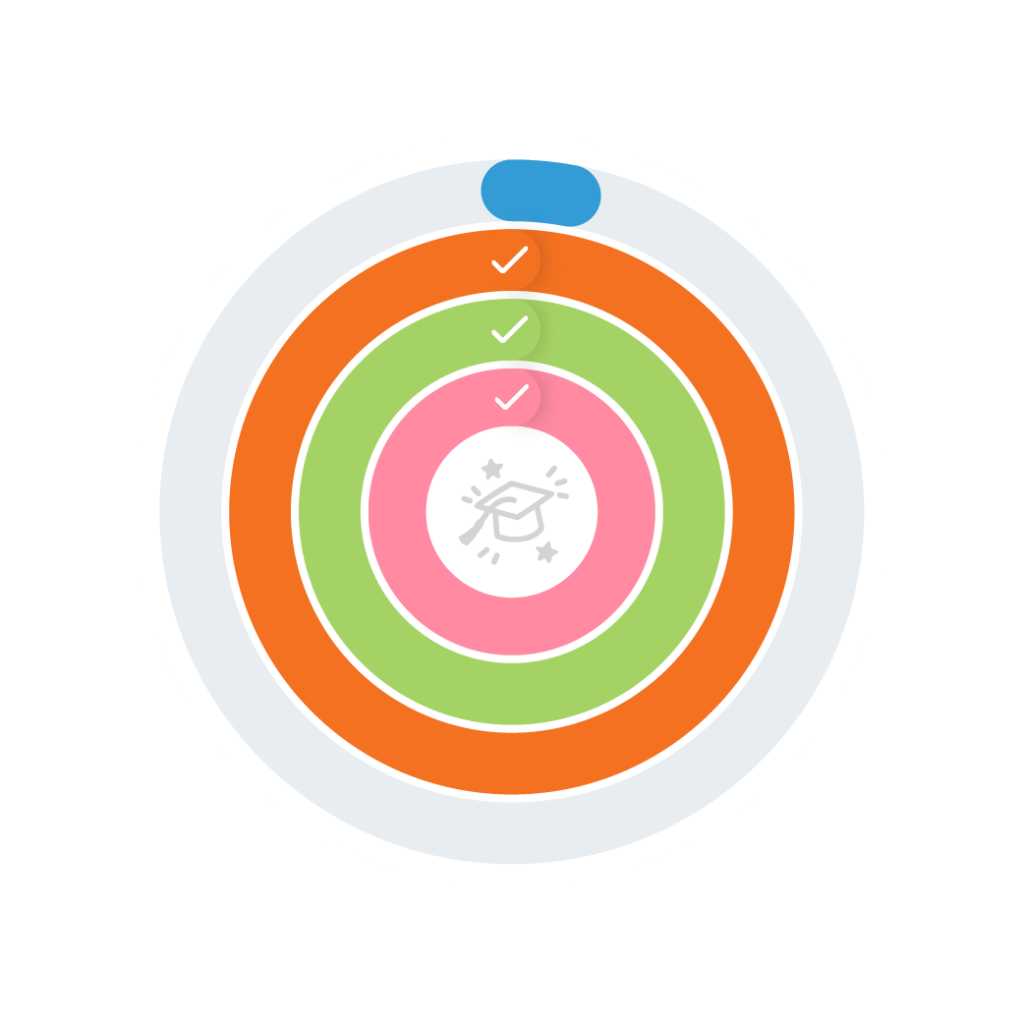
Levels where Flip to Breathe is taught
Flip to Breathe is a key component of the later Little levels for kids ages 3-5, the early Middle levels for kids ages 5-7, and all other introductory levels for older students. It is also introduced to the oldest toddlers in our Backfloat Baby program and will be mastered as they progress.
- Backfloat Baby 4
- Little 2-4 (3-5 years)
- Middle 1-2 (5-7 years)
Backfloat Baby 4
Little 2-4 (3-5 years)
Middle 1-2 (5-7 years)
Big 1 (7-10 years)
10+1 (10-17 years)
Adult 1 (18+ years)
- Big 1 (7-10 years)
- 10+1 (10-17 years)
- Adult 1 (18+ years)
Reaching the Flip to Breathe Milestone and Moving to the Next Stage
Like every part of our Learn to Swim program, flipping to breathe is taught progressively. It is the culmination of everything we teach for safety, and the foundation of everything we teach going forward on the Swim Path.
Once a student has mastered flipping to breathe, they are ready to take the next step: learning to Swim Confidently, where the basic Safety Stroke is expanded and refined into key front and back strokes. In fact, the Flip to Breathe skills are used when swimming the freestyle – in that stroke, the swimmer still rolls their shoulders, but only 90 degrees (instead of the full 180 degrees of a flip), takes a side breath, then rolls back onto their front.
Even if a student doesn’t plan to compete, knowing how to swim confidently helps them gain the full exercise benefits of swimming, and lets them have the fun of variety too!