Swimming does not require a lot of gear; in fact, that’s part of its appeal. But if your student loves certain parts of their lessons, summer can be a great time to bring some swim school gear and toys home for practice, play, and confidence-building.
Many of these items are available through FOSS, either at our in-school shops or our online store, and others are easy to find at a local store. The goal is never to replace supervision nor should it be to turn every minute of water time into a formal lesson. But with some familiar items your swimmer enjoys, you can make time in the tub, pool, or at the beach a little more fun and a light learning opportunity.
Here are some favorite pieces of swim school gear, what they do, and how to use them well:
Big Barbell
A big barbell is a floating foam bar that gives swimmers support while they work on kicking. Swimmers hang over the top of the barbell and practice their kicking with it.
- What it’s used for:
It helps kids stay afloat while they focus on moving their legs. - Tips for use:
Use it in a pool where your child can be closely supervised. Encourage them to lean forward over the bar rather than clutch it upright. Keep the focus on long, steady kicks. And yes, this is a good time to remind kids that it is not a lightsaber.
Power Pack (Waist Float Belt)
The Power Pack is a flotation aid made of foam pieces threaded onto a strap and worn around the swimmer’s midsection.
- What it’s used for:
It provides adjustable float support while swimmers work on skills and confidence in the water. - Tips for use:
These come with four foam pieces, and we remove foam to gradually reduce the float support as they improve. If your child uses one in lessons, follow your teacher’s lead at home. More flotation is not always better if it changes body position too much. And as always, this is a practice tool, not a life jacket.
Pool Noodles
Pool noodles are simple, inexpensive, and easy to find almost anywhere. (Except at FOSS – they’re accessible enough and bulky that we choose not to stock them.)
- What they’re used for:
They can support floating, kicking, games, and general comfort in the water. - Tips for use:
Try placing a noodle under the arms, behind the back, or having your child hold it out front while kicking. They are great for relaxed play, but they still need active adult supervision.

Dive Rings
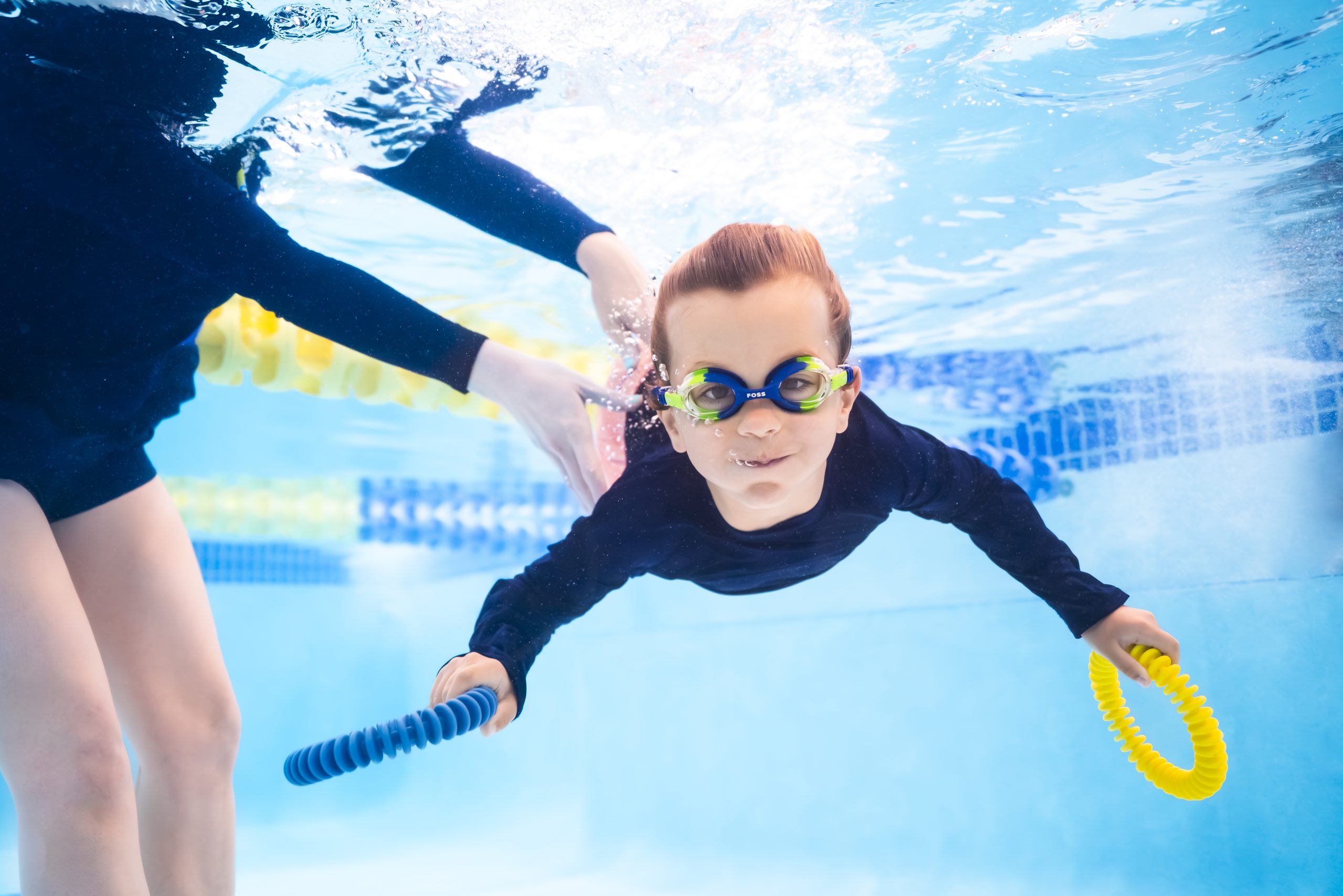
Dive rings sink to the bottom of the pool and give swimmers a visible target to retrieve.
- What they’re used for:
Diving for rings helps practice breath control, submersion, and confidence swimming underwater. - Tips for use:
These are best used in a pool, and sometimes in the tub for little ones. Skip the lake or beach, where they are likely to disappear. Start in shallow water and make the goal simple: look down, reach, and retrieve. Keep it playful.
Training Fins
Training fins are shorter than scuba-style fins and are designed for swim practice.
- What they’re used for:
They help swimmers move through the water while learning a more effective kick. Short fins help eliminate bicycle kicking by teaching swimmers to extend their legs and point their feet. - Tips for use:
Choose a snug but comfortable fit. Fins should support good technique, not become a tripping hazard, so have swimmers put them on close to the water and walk carefully. These can be a real confidence booster, especially for kids who enjoy feeling a little extra momentum.
Small Barbell
The small barbell is designed to be grabbed in one hand. It can provide a similar but lesser flotation aid, but we often use it to practice form during arm exercises, passing it from hand to hand as each arm comes forward in a freestyle motion, for example.
- What it’s used for:
It can help with kicking, body position, and arm movement practice as skills progress. - Tips for use:
This is often a better fit for more advanced kids who are ready for a bit more challenge. Start with simple kicking drills, then add basic stroke movements if your swimmer’s teacher has introduced them.
Magic Carpet
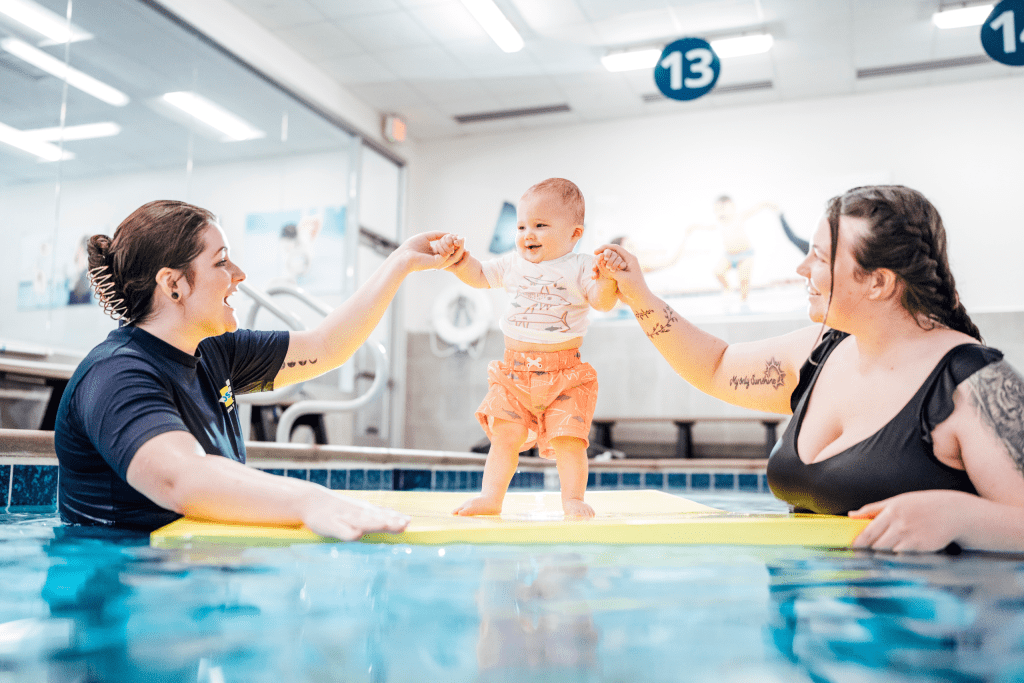
The FOSS Magic Carpet is an inflatable floating mat made from durable, paddleboard-like material. We designed it and have it manufactured custom for our schools, and offer it through our online store as well. It’s one of the most loved pieces of swim school gear we use!
- What it’s used for:
It creates a stable surface for water play, early swim activities, and jump practice. - Tips for use:
This is especially fun in pools and calm lake settings near a dock. Kids can sit on it, climb onto it, or practice jumping off with close adult help. Because it is inflatable, make sure it is fully set up before use and always keep it within arm’s reach of an adult.
Floating Mirror
A floating mirror is used at FOSS to engage babies and younger swimmers.
- What it’s used for:
A mirror can help babies and toddlers feel more comfortable during bath or water adjustment time. - Tips for use:
Play with it in the bathtub or shallow water. A mirror can encourage little ones to lift their heads, look at themselves, and stay engaged.
Simple Water Toys
Small squirty toys and other basic bath toys can do more than entertain.
- What they’re used for:
They help young swimmers get used to splashing, pouring, reaching, and having water on their face and hair. - Tips for use:
Use them in the tub, pool, or at the beach to build comfort. Pour water gently, play simple games, and let your child explore. Toys work best when they support positive experiences in the water.
With the right gear and a watchful adult nearby, summer swim time can be both fun and useful. A few simple pieces of swim school gear can help your child practice skills, build confidence, and enjoy the water even more.
