At Foss Swim School, our mission is to help everyone become a stronger, safer, and more confident swimmer. We do this through high-quality swim lessons and by helping families understand what matters most when learning to swim.
With years of experience teaching swimmers of all ages, we know that choosing a swim school is an important decision—and that one approach does not fit every child or family.
Whether you’re learning how to choose a swim school for the first time, considering enrollment at Foss Swim School, or comparing different swim lesson programs, this checklist is designed to help. Some factors may be essential, while others will depend on your goals, preferences, and situation.
We hope this guide helps you find the right swim school and supports your swimmer’s journey toward confidence and safety in the water.
Swim Program Evaluation Checklist
Use this checklist to guide your evaluation and questions when choosing a learn-to-swim program for your child.
Safety and Credentials
Safety should always come first. Instructors should be properly trained and certified. Ask about emergency procedures, staff training, and overall safety protocols.
Class Size and Ratio
In general, smaller classes and higher ratios are a good thing, though they vary from infancy (1:1 ratio, including parents) to 4-6 swimmers per instructor for older kids and more advanced swimmers.
Facilities, Cleanliness, and Comfort
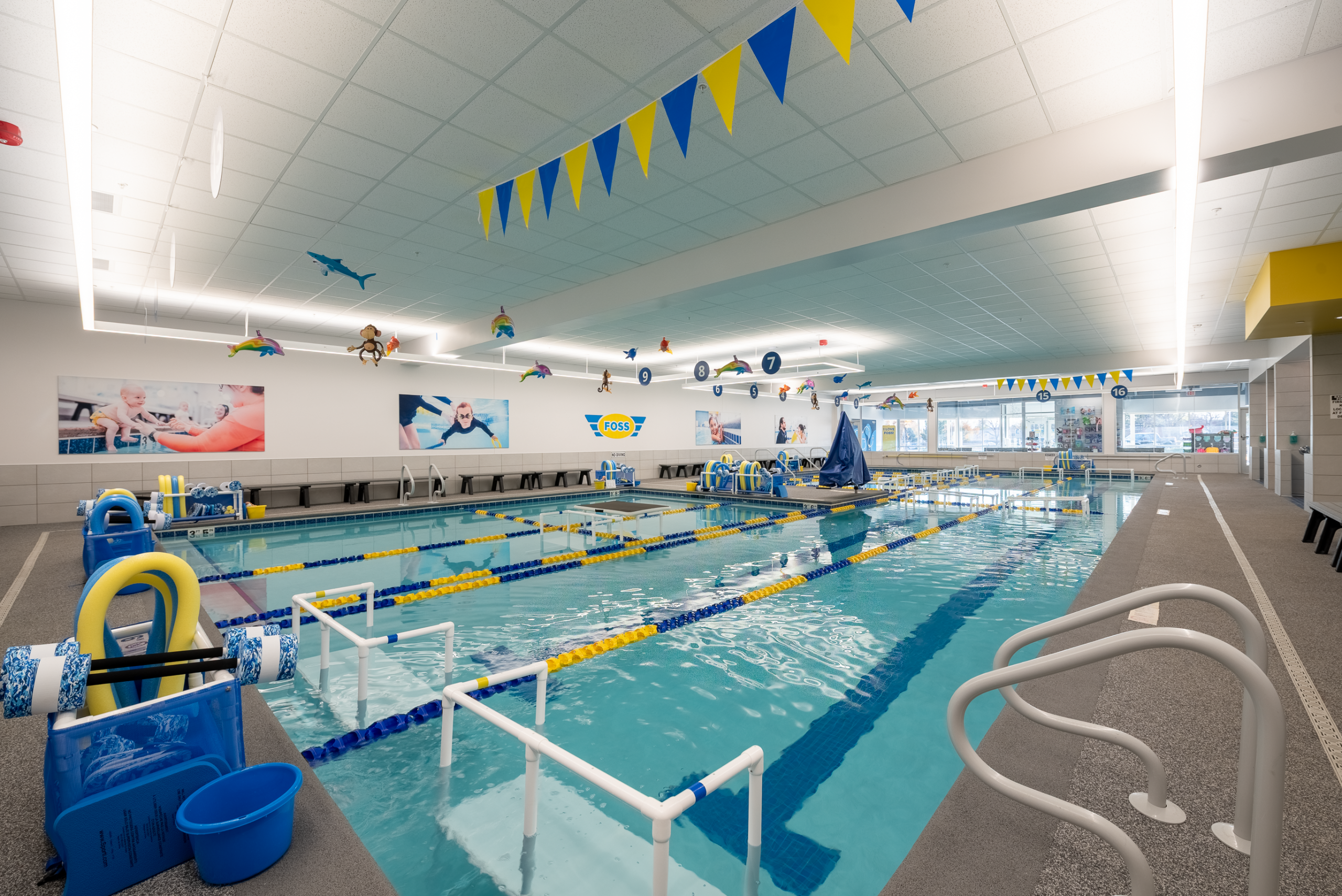
Look for clear water and ask about filtration and cleaning procedures. Pool decks and changing areas should be clean, well-maintained, and safe. Comfort matters too—consider water and air temperature, as well as whether the environment feels welcoming for both swimmers and parents.
Teaching Goals
A quality learn-to-swim program should begin with water safety, learning to respect water, and practicing self-rescue skills. From there, programs should focus on stroke development, skill progression, and building confidence in the water.
Teacher/Student Compatability
Meet the instructor whenever possible and observe how they interact with swimmers. Do students seem engaged and happy? Are instructors and staff attentive and encouraging? A positive program environment can make a big difference in a child’s learning experience.
Parent Involvement
Consider the role you want to play in your child’s swim lessons. Ask:
When are parents in the water?
Can parents observe lessons from the pool deck?
How is progress measured and communicated?
Are parents encouraged to ask questions?
Clear communication and transparency help families stay engaged and informed.
Class Structure and Make-Up Lessons
Ask whether the program runs in sessions or as continuous enrollment. How often do classes meet, and how long is each lesson? With busy family schedules, the ability to make up missed lessons can be an important factor.
Schedule, Location, and Accessibility
Even the best swim program won’t work if it doesn’t fit into your routine. Look for a location that’s convenient to home, school, or work. Long drives can make attendance harder over time. Accessibility also includes tuition—consider the overall value of the program and choose an option that works for your family’s budget.
A Note from Foss Swim School
If Foss Swim School is on your list, we invite you to visit your local school and experience our program firsthand. We offer free Preview Lessons so you can see our teaching philosophy and proven curriculum in action—and receive a personalized level recommendation for your swimmer.
Wherever you choose, enrolling your child in a learn-to-swim program is a lifelong investment in their well-being. Beyond safety, swim lessons build confidence, support health, and open the door to a lifetime of enjoyment in the water.
