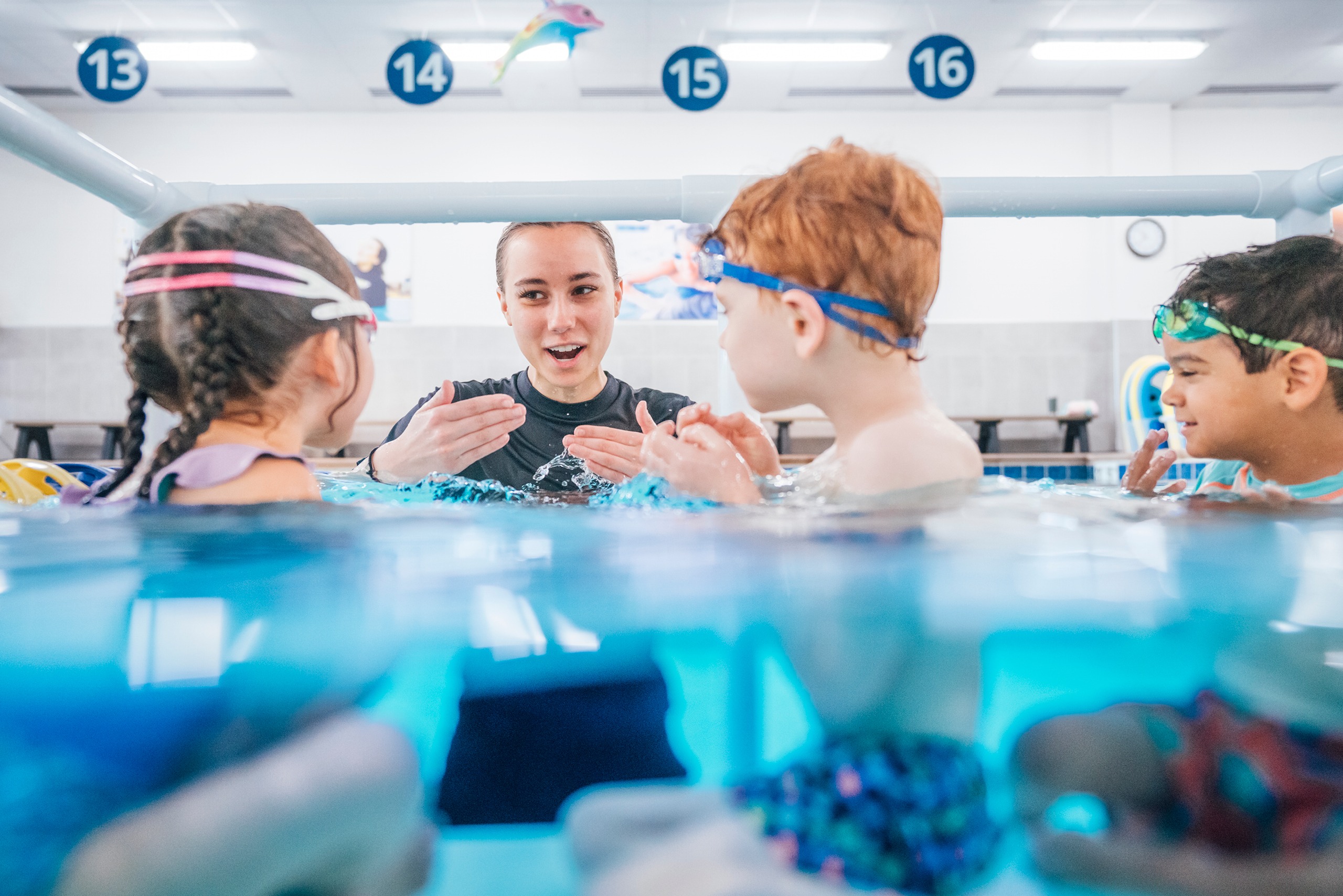
Most parents take water safety seriously, and Foss Swim School and many others help deliver the message: Enroll in swim lessons, keep a close eye on swimmers, and know the basics of what to do in an emergency. But there’s one gap that might be overlooked: Does the person in charge when you’re not around know what you know?
When summer rolls around and kids are heading to the pool, lake, or beach with a babysitter or family member, caregiver water safety awareness matters just as much as or even more than your own.
The statistics show why: Drowning is the second leading cause of accidental death in children ages 5–14. In the U.S., more than 4,000 people die from drowning each year, with thousands more experiencing non-fatal drownings that can have long-term effects. Perhaps the most sobering statistic: nearly 9 out of 10 drownings happen with adults present.
That last number is the one every caregiver needs to remember. Proximity is not the same as protection. What keeps kids safe is an attentive adult who knows what to watch for and what to do. Whether looking for new summer childcare or talking with your current provider, here’s what to ask and what to share.
What Caregivers Need to Understand
When vetting a caregiver — or simply briefing a family member before a pool day — make sure they’re clear on the following:
- Drowning doesn’t look like the movies. There’s no splashing or yelling for help. A person in distress is typically low in the water, unable to call out or raise their arms. The only way to catch it in time is to be actively watching.
- Supervision means full attention. A caregiver cannot be on their phone, deep in conversation, or reading while watching kids near water. Active watching means eyes on the swimmers, all the time. If they need to step away, a clear handoff to another responsible adult is a must, not just a casual “Can you watch them for a sec?”
- Flotation devices are not a substitute for supervision. Water wings and swim vests can give kids and caregivers a false sense of security. They are useful tools, but they don’t replace attentive adult supervision.
- Know where the water is. This seems obvious, but caregivers should be aware of every body of water in the area — pools, ponds, drainage areas, hot tubs. Even containers that might collect rain can be dangerous, especially for infants and toddlers.
The Water Watcher Approach
One practical tool worth sharing with any caregiver is the Water Watcher method. The idea is simple: one designated adult is “on duty” to watch swimmers at all times. That person stays focused, avoids distractions, and does not leave their post until they’ve explicitly handed off the responsibility to another adult.
This system works because it removes ambiguity. When everyone assumes someone else is watching, no one is. A clearly designated Water Watcher closes that gap.
If you’re hosting a group event near water, consider making a physical token that can be worn visibly — a tag, bracelet, or card on a lanyard, such as this one created by FOSS — that gets passed from watcher to watcher. The physical handoff ensures there’s never any confusion about who’s responsible.
What to Ask Before Hiring or Leaving Your Kids With a Caregiver
A few quick questions can go a long way in assessing whether a caregiver is prepared:
- Are you comfortable watching kids in and around water?
- Do you know what to do if a child goes under?
- Are you familiar with the Water Watcher approach?
- Have you taken a CPR or first aid course? (Many babysitter certifications include this.)
You don’t need a caregiver who is a certified lifeguard. But you do need someone who takes water supervision seriously and won’t let their guard down, even for a minute.
Water Safety Is a Shared Responsibility
Parents do a tremendous job helping promote water safety for their kids, but that awareness needs to extend to everyone who spends time with them. Caregivers who understand drowning risks, practice active supervision, and know when and how to act can make all the difference.
At Foss Swim School, water safety is at the heart of everything we do. Our mission is to help everyone — kids and caregivers alike — become stronger, safer, more confident around water. That means equipping not just swimmers, but the communities and people around them with the knowledge they need.
For more water safety resources, visit our Water Safety for Parents and Swimmers page. And if your child hasn’t started swim lessons yet, there’s no better time than now—research shows that formal swim instruction can reduce drowning risk in children ages 1–4 by up to 88%.
