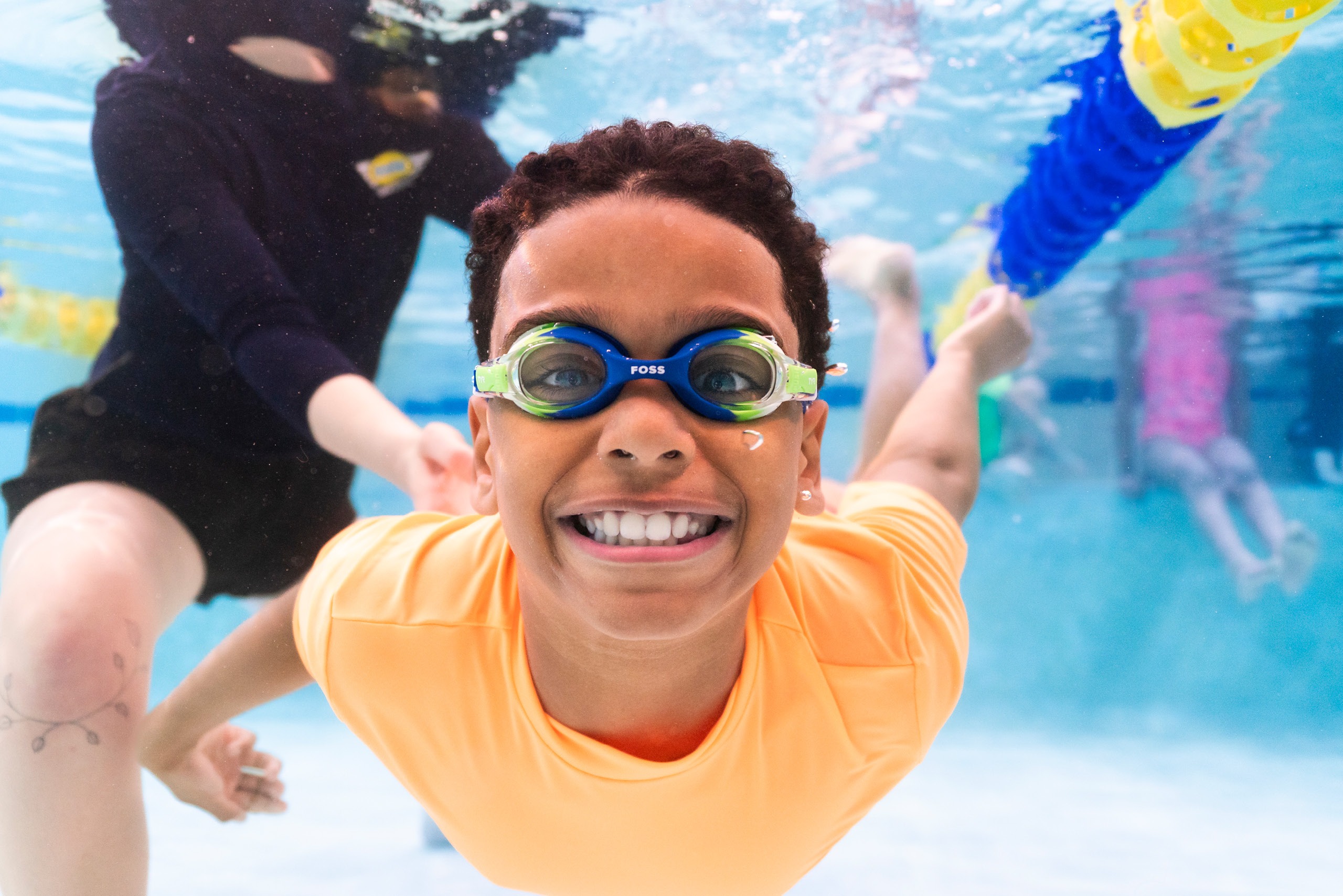
There’s a reason we talk so much about consistency in swim lessons. Learning to swim isn’t a single breakthrough. It’s a series of small ones that stack up, week after week, to build the skills and confidence of a swimmer.
It’s also why we’ve been making some changes to how we structure our calendar — and why families who have been with FOSS for a while might notice something different when you enroll in winter quarter this year.
Something New on the Schedule
In past years, FOSS families were used to a Winter Quarter that kicked off in early January, after the holiday season had settled. This year, Winter Quarter begins on November 30 — about a month earlier. This isn’t a one-time adjustment. It’s part of a deliberate realignment that we’ve been rolling out over the past several months.
In the past, our Winter Quarter ran a little shorter than the others, while Spring, Summer, and Fall were slightly longer. It wasn’t a huge difference, but it was enough to mean that teachers had to adjust their pacing depending on the season, and tuition varied a bit from quarter to quarter.
Now, every FOSS quarter runs 12 or 13 weeks, meaning:
- Our teachers can follow the same curriculum no matter what the quarter, without needing to compress or stretch lessons to fit a shorter window.
- Tuition becomes more predictable for families, which makes budgeting a little easier.
- And students can settle into a steadier, more familiar rhythm — which, as it turns out, is one of the best things you can do for a young swimmer.
If the November 30 start date raises any scheduling questions for your family — especially with the holidays coming up — just stop by the front desk. We’re happy to help you find a class time that works.
The Case for Weekly Swim Lessons
So why does consistency matter so much when it comes to learning to swim? It comes down to time and momentum.
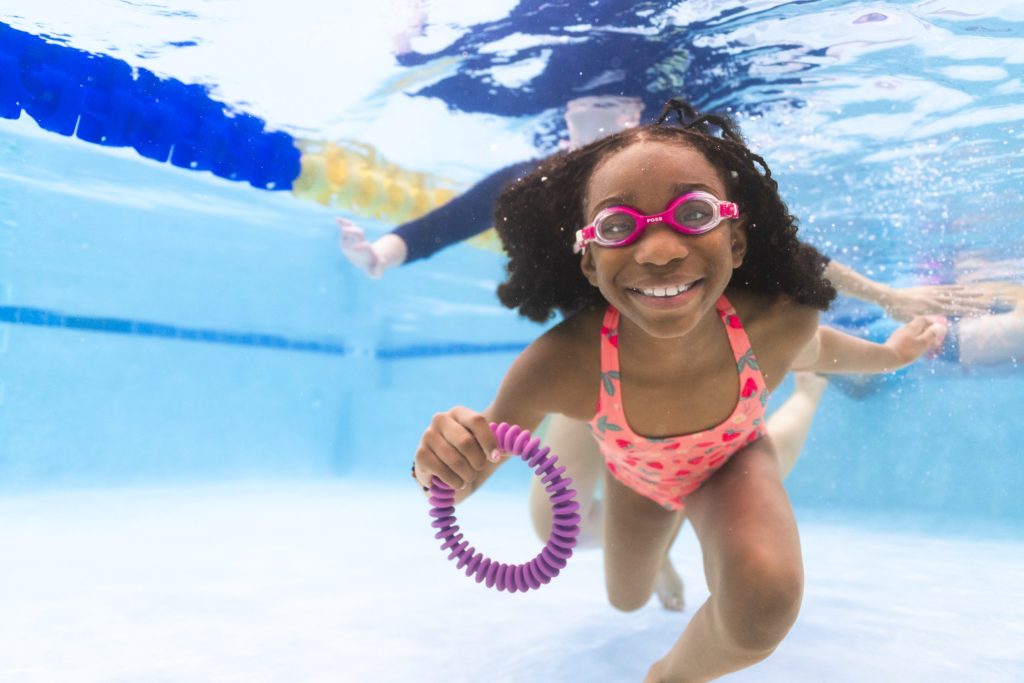
When you add it all up, a swimmer who attends a 30- to 45-minute class once a week for an entire quarter gets between 6 and 9 hours of formal instruction. That’s a small window to build a set of skills that need to feel second nature. Every single class carries weight.
Think about how a child learns to walk. It doesn’t happen in one afternoon. It’s weeks of wobbling and catching and trying again, each attempt laying the groundwork for the next. Swimming works the same way. One class might introduce a new kick, the next reinforces it, and the class after that starts connecting it to a full stroke. Miss a week, and that chain gets interrupted. Miss a few, and the body starts to forget — muscle memory fades faster than most people expect, and techniques that were just starting to feel natural can slip away.
We’ve seen this ourselves. Students who miss more than 20% of their sessions in a quarter are less likely to progress and less likely to graduate from our Learn to Swim program. Regular attendance and putting in effort week after week genuinely moves the needle.
Swim Lesson Consistency Takes All of Us
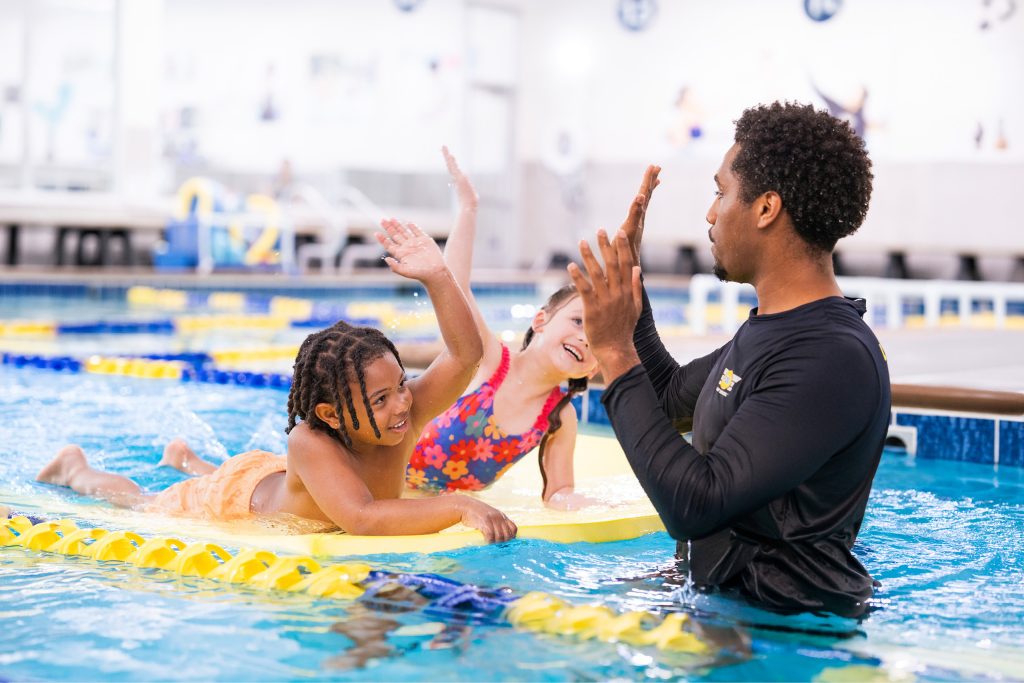
At FOSS, we think of learning to swim as a team effort. Our teachers bring the expertise and the curriculum, and they genuinely love helping kids get more comfortable and capable in the water. Students bring their effort and their curiosity. And parents and guardians bring something just as important: consistency.
Getting your swimmer to class every week, cheering their small wins, and asking teachers what skills to work on at home are all ways to build consistency. Celebrating wins and progress matters too. Positive energy keeps kids engaged, and engaged kids learn faster.
Our realigned quarterly schedule is one part of creating the right conditions for that learning to happen. Your swimmer showing up is the other. When both pieces are in place, progress tends to follow, and the confidence that comes with it is something that sticks with a child long after they’ve left the pool.
